Imagine cruising down Ocean Drive in Miami Beach on a sunny afternoon when suddenly, an unexpected collision disrupts the rhythm of your day. The palm trees sway, but your world has just turned chaotic. Accidents like these are all too common in our bustling city, from the high-speed avenues of Pinecrest to the lively streets of Coconut Grove. In the heat of the moment, knowing the right safe steps can make all the difference—not just for your well-being, but for everyone involved. This guide from Miami Trauma Cleanup is your roadmap to handling trauma scenes effectively, ensuring safety and minimizing long-term impacts.
As Miami’s trusted trauma cleanup experts, we’ve seen it all: car crashes on the I-95, unfortunate incidents in residential neighborhoods like Cutler Bay, and more. Our mission is to empower you with practical knowledge so you can respond confidently. Whether it’s a minor fender-bender or a more severe event, these steps will help you navigate the aftermath while awaiting professional assistance. Let’s dive into the essentials.
Immediate Actions: Prioritizing Safety First
The seconds right after an accident are critical. Your first instinct might be panic, but channeling that energy into safety measures can prevent further harm. In Miami’s unpredictable traffic—think congested A1A during tourist season—quick thinking is key.
Assess the Situation
Stop your vehicle safely if possible and check for injuries. Look around for hazards like leaking fluids or downed power lines, especially common after storms in areas like North Miami Beach. If anyone is hurt, do not move them unless there’s immediate danger, such as approaching traffic. Call 911 right away; Miami-Dade emergency services respond swiftly, but your clear report helps them prepare.
Secure the Scene
Turn on hazard lights and set up warning triangles or flares if available. In Miami’s humid climate, visibility can drop quickly with rain or fog, so position yourself to alert other drivers. If the accident involves bodily fluids or debris, avoid direct contact—biohazards are a real risk here, where heat accelerates bacterial growth.
For practical tips, remember: Keep a first-aid kit in your car tailored for Florida’s conditions, including gloves and antiseptics. This simple preparation can buy you time until help arrives.
Health and Emotional Response: Taking Care of Yourself and Others
Beyond the physical scene, accidents take a toll emotionally. Miami’s vibrant energy can feel overwhelming post-incident, amplifying stress in neighborhoods like the energetic Coconut Grove.
Check for Injuries and Provide Basic Aid
Once the area is secure, assess everyone involved. Look for signs of shock, such as pale skin or confusion, and keep victims comfortable—elevate legs if no spinal injury is suspected. In our tropical climate, dehydration sets in fast, so offer water if conscious and able.
If trauma results in blood spills, resist the urge to clean it yourself. Professional blood spill remediation is essential to avoid exposure to pathogens like hepatitis. Miami Trauma Cleanup specializes in this, ensuring safe handling per CDC guidelines.
Manage Emotional Aftermath
Accidents can trigger anxiety or PTSD, especially in high-stress environments like Miami’s fast-paced lifestyle. Encourage deep breathing and reassure those affected. If you’re in Pinecrest or nearby suburbs, local resources like Miami-Dade’s crisis hotlines (dial 211) offer immediate support. Remember, it’s okay to seek counseling—your mental health matters as much as the physical cleanup.
Documenting the Incident: Protecting Your Interests
In the chaos, documentation often gets overlooked, but it’s crucial for insurance and legal purposes. Miami’s diverse roadways, from the urban sprawl of Cutler Bay to the coastal vibes of Miami Beach, see thousands of claims yearly.
Gather Evidence
Take photos of the scene, vehicle damage, and any injuries (with permission). Note license plates, witness contacts, and officer details if police arrive. In Florida, you’re required to exchange info with other parties, but jot down everything to avoid disputes later.
Report the Accident
File a report with the Florida Highway Safety and Motor Vehicles within 10 days if damages exceed $500 or injuries occur. For Miami-specific incidents, check local ordinances—areas like North Miami Beach may have additional traffic protocols.
Pro tip: Use your phone’s voice notes for quick details while adrenaline is high. This actionable step ensures you’re covered when filing claims.
When to Call Professionals: The Role of Trauma Cleanup
Not all accidents require pros, but when trauma is involved, DIY is dangerous. Biohazards, odors, and structural damage demand experts who follow OSHA standards.
Identifying When Help is Needed
If there’s blood, bodily fluids, or decomposition risks—common in Miami’s warm weather—contact specialists immediately. Delaying can lead to health violations or property devaluation.
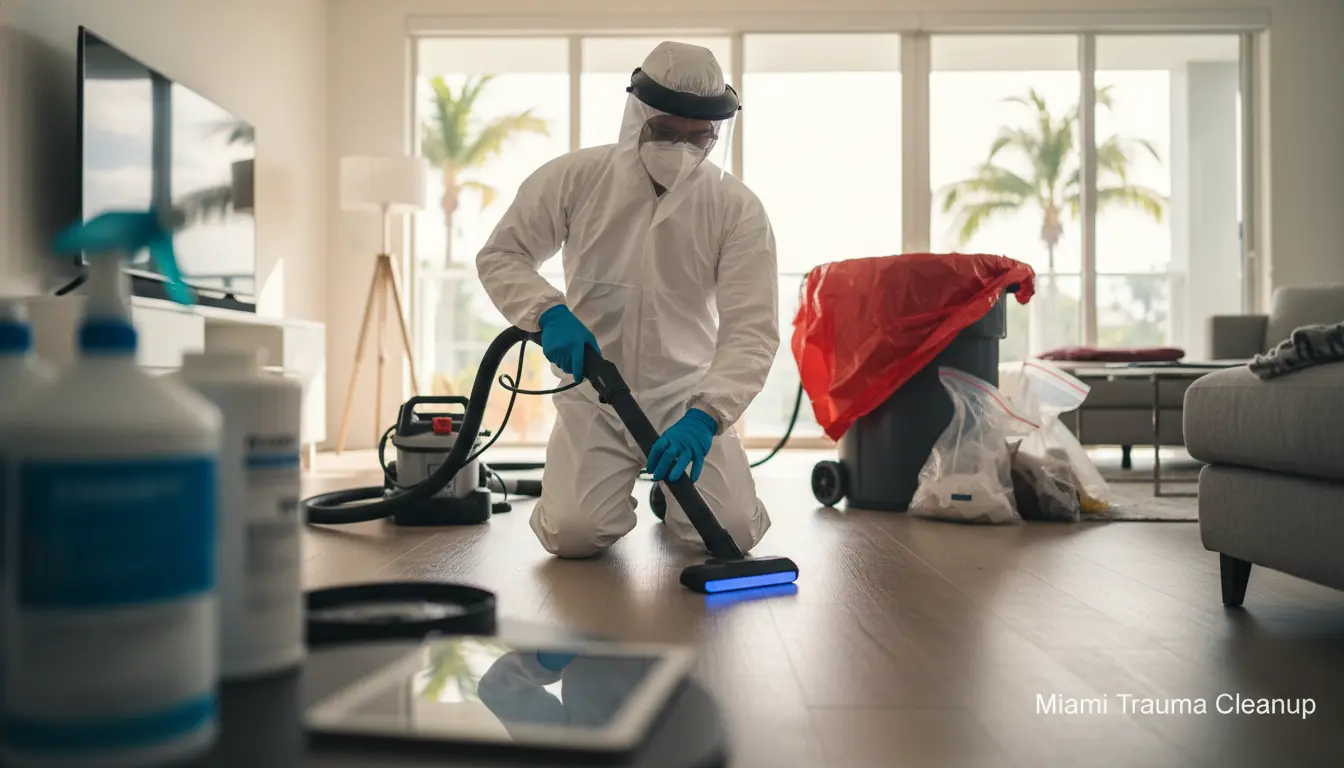
Miami Trauma Cleanup offers 24/7 response for forensic cleaning procedures, using EPA-approved methods to restore safety. We’ve served communities from the upscale homes of Pinecrest to the beachfront properties in Miami Beach, understanding local needs like salt air corrosion.
Benefits of Professional Services
Pros handle trauma waste removal discreetly, preventing cross-contamination. In humid Miami, improper cleanup can breed mold—our disinfection and sanitization services eliminate this risk. Plus, we manage insurance paperwork, saving you time during recovery.
For persistent smells after an incident in areas like Coconut Grove, our odor elimination treatment restores freshness without harsh chemicals.
Local Miami Considerations: Tailoring Response to Our City
Miami’s unique environment shapes how we handle accidents. From hurricane-prone zones in Cutler Bay to the tourist-heavy strips of North Miami Beach, local factors influence response.
Weather and Environmental Impacts
Our subtropical climate means quick spoilage of organic matter. After an accident, fluids can attract pests—secure the area to deter Miami’s infamous insects. If in a flood-prone spot like near Biscayne Bay, watch for water mixing with hazards.
Community and Legal Nuances
Miami-Dade County emphasizes rapid response due to population density. In multicultural neighborhoods, language barriers might arise—many services, including ours at Miami Trauma Cleanup, offer Spanish support. Always respect cultural sensitivities when assisting others.
Practical advice: Familiarize yourself with Miami’s no-fault insurance laws; they cover medical costs regardless of fault, easing initial burdens.
FAQ: Common Questions About Post-Accident Response in Miami
What should I do if there’s a spill involving blood after an accident?
Avoid touching it directly. Isolate the area and call professionals for blood spill remediation. In Miami’s heat, risks multiply—don’t delay.
How quickly does Miami Trauma Cleanup respond to calls?
We provide 24/7 emergency service, arriving within hours anywhere from Miami Beach to Pinecrest. Dial (305) 419-9128 for immediate assistance.
Is professional cleanup covered by insurance in Florida?
Often yes, especially for biohazard scenarios. We work with insurers to streamline claims—contact us to discuss your situation.
What if the accident happens in a rental property in Coconut Grove?
Notify your landlord and secure the scene. For cleanup, our team handles disinfection and sanitization to meet health codes, preventing lease issues.
Can I clean a minor trauma scene myself?
For safety, no—biohazards require certification. Trust experts for thorough odor elimination treatment and waste disposal.
Conclusion: Empower Yourself with Knowledge and Support
Navigating the aftermath of an accident in Miami doesn’t have to be overwhelming. By following these safe steps—from immediate safety checks to calling in pros like Miami Trauma Cleanup—you protect yourself, others, and your property. Our city’s spirit is resilient, and with the right response, you can get back to enjoying the beaches, the culture, and the endless sunshine.
Don’t leave trauma cleanup to chance. Whether you’re in Cutler Bay, North Miami Beach, or anywhere in between, Miami Trauma Cleanup is here 24/7. Call us today at (305) 419-9128 for compassionate, efficient service that restores peace of mind. Your safety—and our city’s vibrancy—starts with one informed step.